

GSM-R and FRMCS: the radio that keeps trains moving
GSM-R is the railways' own dedicated radio network: it connects the driver, the control center and trackside staff on reserved frequencies, and it carries the data of the ETCS train control system. Its designated successor is called FRMCS and is built on 5G: the transition is expected from 2030 onwards, with a long period of coexistence between the two networks. Here is what GSM-R is, which frequencies it works on, which functions set it apart from an ordinary mobile network, and what changes with FRMCS.
What GSM-R is
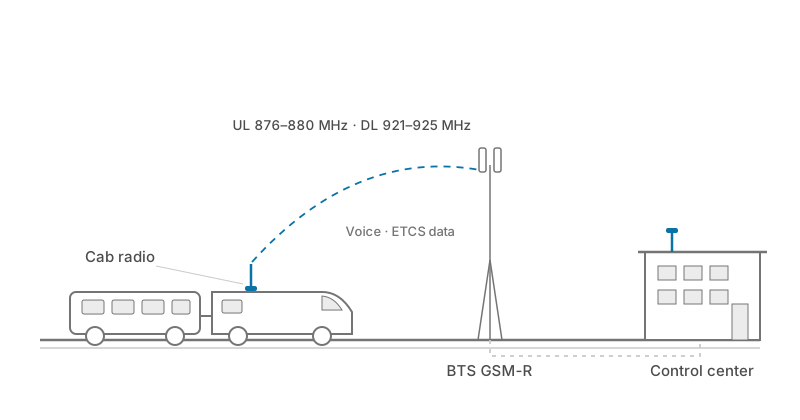
GSM-R stands for GSM-Railway: it is the railway adaptation of the GSM cellular standard, defined at European level by the UIC (the international union of railways) through the EIRENE specifications. It is the network the driver uses to talk to the control center, to receive emergency calls and to exchange signaling data along the line.
Unlike a public cellular network, GSM-R is built and operated by the railway infrastructure manager: every country has its own network, run by its national manager (RFI in Italy). Base stations are sited along the track, coverage is engineered for the railway line rather than for the surrounding territory, and availability requirements are those of a mission-critical communications system, not of a commercial service.
GSM-R frequencies
GSM-R works in a reserved portion of the 900 MHz band, separate from the one used by public operators:
| Band | Uplink (train → network) | Downlink (network → train) |
|---|---|---|
| GSM-R | 876–880 MHz | 921–925 MHz |
| E-GSM-R (extension, on a national basis) | 873–876 MHz | 918–921 MHz |
The proximity of the public operators' 900 MHz band is not a detail: adjacent commercial 4G and 5G carriers can interfere with onboard GSM-R receivers, and that is one of the reasons why the radio quality of a line has to be verified with field measurements, not only on paper.
The functions public GSM does not have
On top of the GSM standard, GSM-R adds a set of functions designed for railway operations, known as ASCI:
- Group calls (VGCS): everyone working on a section of line takes part in the same conversation, exactly as on a professional radio network.
- Broadcast calls (VBS): a single announcement reaches every train in an area at once.
- Priority and pre-emption (eMLPP): critical calls always get through, even on a loaded network, by suspending less urgent ones.
- Railway emergency call (REC): reaches every train and control post in the area concerned within seconds.
- Functional numbering: you call "train 9615" or "the driver on platform 3", not a personal phone number: addressing follows the role and the position, not the SIM.
Onboard, these functions run through the cab radio, the GSM-R terminal installed in the driver's cab, while trackside staff use handheld GSM-R phones type-approved for the railway environment.
GSM-R, ERTMS and ETCS: how they work together
GSM-R is one of the two pillars of ERTMS, the European rail traffic management system. The other pillar is ETCS, the train control system: at the more advanced levels (ETCS Level 2), train position and movement authorities travel over the GSM-R network itself, continuously between train and trackside.
This is why the EIRENE specifications impose stricter coverage requirements on ETCS lines: at the same coverage probability (95%), the minimum signal level required goes up, from −98 dBm for voice to −95 dBm on ETCS lines, and as far as −92 dBm above 280 km/h. A radio gap is not just a dropped call, it is a signaling message that never arrives.
GSM-R coverage in tunnels
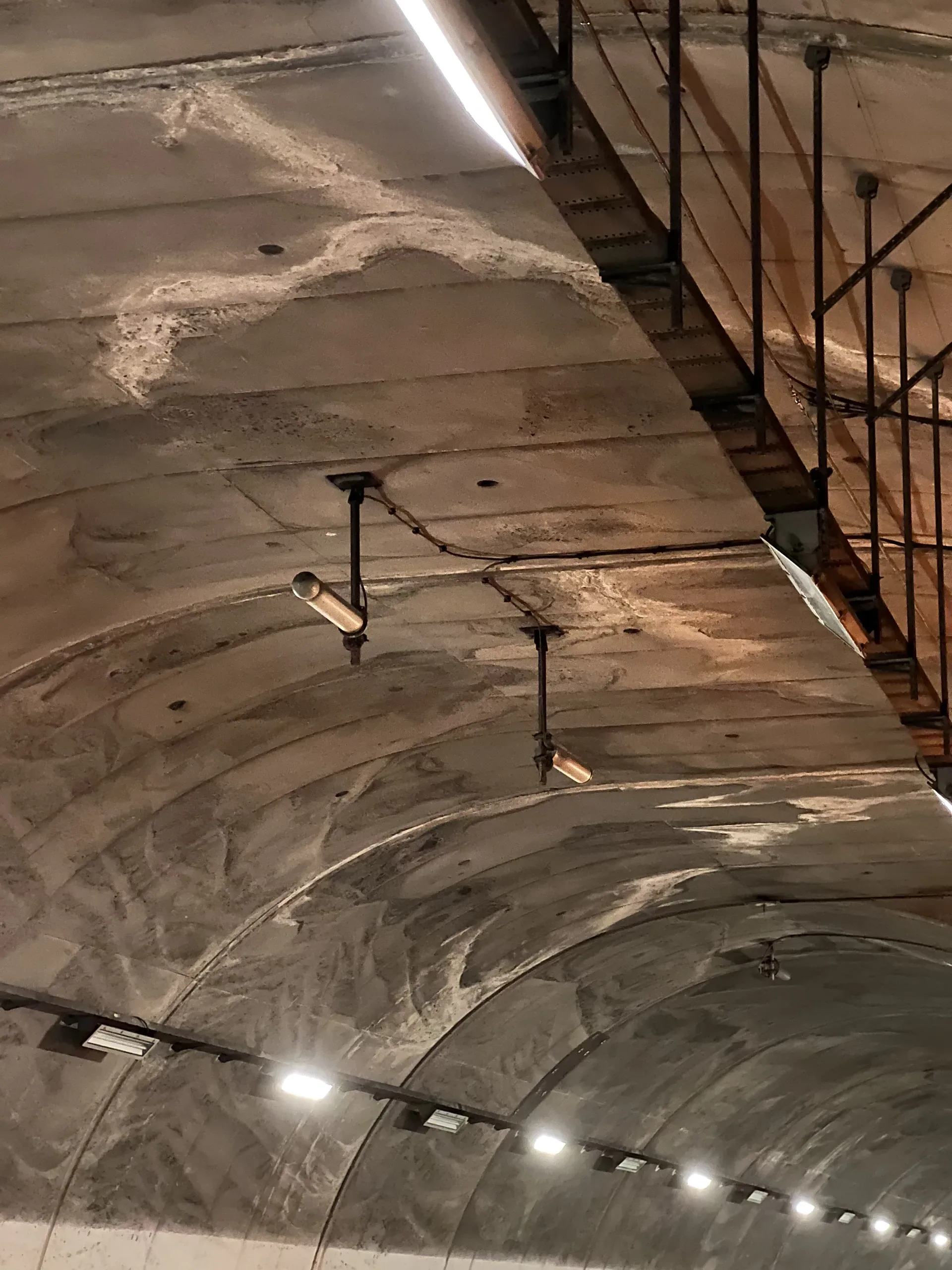
The most delicate point of a GSM-R network is the tunnel: the signal from the external base stations does not penetrate under the mountain, and coverage has to be rebuilt with dedicated systems, typically radiating cables or DAS systems fed by repeaters.
This is the ground Teleproject has worked on for twenty years: radio coverage design in tunnels, installation of the systems, radiating cable monitoring and field verification, for railways and critical infrastructure. The same expertise described in our solutions for railways and metros.
FRMCS: what it is and when it arrives
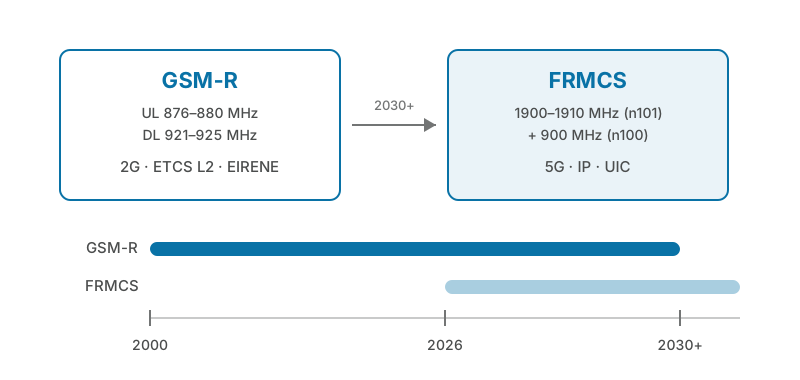
FRMCS (Future Railway Mobile Communication System) is the standard defined by the UIC to replace GSM-R. It is built on 5G, it is entirely IP and it is designed to carry far more data: not only voice and signaling, but also telemetry, video and driving automation applications.
Europe has allocated new dedicated frequencies to FRMCS: the 1900–1910 MHz band (n101) and a portion of the 900 MHz band (n100). First trials are under way in several European countries; actual migration is expected from 2030 onwards and will be gradual, with the two networks running in parallel on the same line for years: GSM-R support is planned until around 2035.
FRMCS vs GSM-R: what changes
| GSM-R | FRMCS | |
|---|---|---|
| Technology | 2G (GSM) | 5G |
| Frequencies | 876–880 / 921–925 MHz | 1900–1910 MHz (n101), 900 MHz (n100) |
| Transport | Circuit-switched voice, limited data | Fully IP, broadband |
| Applications | Voice, ETCS L2 | Voice, ETCS, telemetry, video, automation |
| Status | In service | Trials under way, migration from 2030 |
In short: FRMCS is not an upgrade of GSM-R, it is a new network on new frequencies. Whoever runs a line will have to design, cover and test it all over again, tunnels included.
From design to field verification
Whether the network is GSM-R today or FRMCS tomorrow, one thing does not change: the coverage promised on paper has to be verified and maintained over time. For the how, we have devoted a separate guide to GSM-R network monitoring, with the parameters to watch and the EIRENE thresholds; continuous monitoring of signal levels along the line is done with fixed probes such as TP-CELLX.
Frequently asked questions
What does GSM-R stand for?
GSM-Railway: it is the railway version of the GSM cellular standard, defined by the UIC in the EIRENE specifications. The "R" stands for Railway.
What is a GSM-R phone?
It is a radio terminal type-approved for the GSM-R network: the cab radio installed in the driver's cab, or the handheld used by trackside staff. Compared with an ordinary phone it supports the railway functions: group calls, priority, emergency call and functional numbering.
Why don't railways use the ordinary cellular network?
Because a public network does not guarantee what railway operations need: coverage engineered along the line, absolute priority for critical calls, group and emergency calls, mission-critical availability. GSM-R uses reserved frequencies and a dedicated network, operated by the infrastructure manager.
What frequencies does FRMCS use?
The dedicated 1900–1910 MHz band (n101) and a portion of the 900 MHz band (n100), allocated at European level. They are different frequencies from those of GSM-R: this is why migration calls for coverage to be designed again from scratch, tunnels included.