

Smart parking monitoring with LoRaWAN sensors
A LoRaWAN parking sensor is a battery-powered device, installed flush with the pavement at the center of the parking space, that detects the presence of a vehicle and transmits the occupancy status over radio. The data reaches a gateway even kilometers away and flows into a platform that shows free and occupied spaces in real time, on a map and in an app. No cables, no trenching: one cored hole per space is enough, and the battery lasts for years. We explain how detection works, how installation is done, how long the battery lasts, and what it takes to bring smart parking monitoring to a municipality or a private area.
How a LoRaWAN parking sensor works
The latest generation of LoRaWAN parking sensors combines two complementary detection technologies: a three-axis magnetometer, which measures the change in the magnetic field produced by the metal mass of the vehicle, and a 24 GHz radar, which verifies the physical presence of an obstacle above the device. Cross-confirmation between the two channels pushes detection accuracy above 99%.
Dual technology solves the critical cases of single-channel sensors: vehicles with little ferromagnetic mass, magnetic interference from heavy vehicles passing in the adjacent lane, and heavy rain. When the sensor detects a film of water on its cover, it automatically switches to the magnetic channel alone and avoids radar false detections.
The device is built to live in the roadway: IP68 protection rating, resistance to compression loads above 10 tonnes, and an operating temperature from −40 °C to +80 °C. Cars and heavy vehicles driving directly over the space do not damage it.
Detection technologies compared
| Technology | How it detects the vehicle | Strengths | Limitations |
|---|---|---|---|
| Magnetometer | Change in the magnetic field | Minimal power draw, low cost | Sensitive to magnetic interference and to vehicles with little metal mass |
| 24 GHz radar | Radio wave reflection above the sensor | Immune to magnetic interference | A film of water can trigger false detections |
| Dual technology | Cross-confirmation between the two channels | Above 99% accuracy in all conditions | Higher unit cost |
| Cameras with video analytics | Image recognition | A single camera covers several spaces | Needs power, poles, a clear view, and privacy safeguards |
For on-street spaces, dual technology is today's reference standard: the magnetometer alone struggles with passing heavy vehicles and the radar alone with rain, while cross-confirmation eliminates almost all false detections.
How it is installed: core drilling and flush mounting
Installation requires a single cylindrical hole at the center of the space, core-drilled to the diameter and depth specified by the sensor manufacturer. The device is placed upright and centered in the hole, then fixed with two-part resins or mortars rated for road use, resistant to weathering and vehicle traffic.
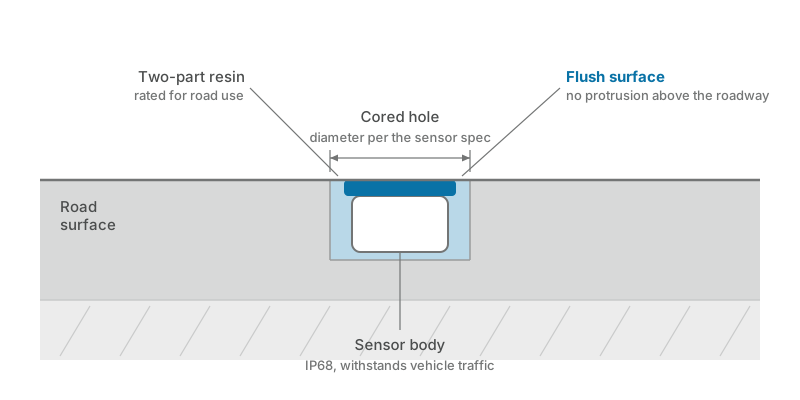
The finished surface stays level with the pavement, with no steps or protrusions: the sensor does not obstruct vehicles, pedestrians, or street-cleaning machines, and the in-ground installation protects it from impacts and vandalism. At the end, our technicians verify each device and test the radio transmission to the platform, space by space.
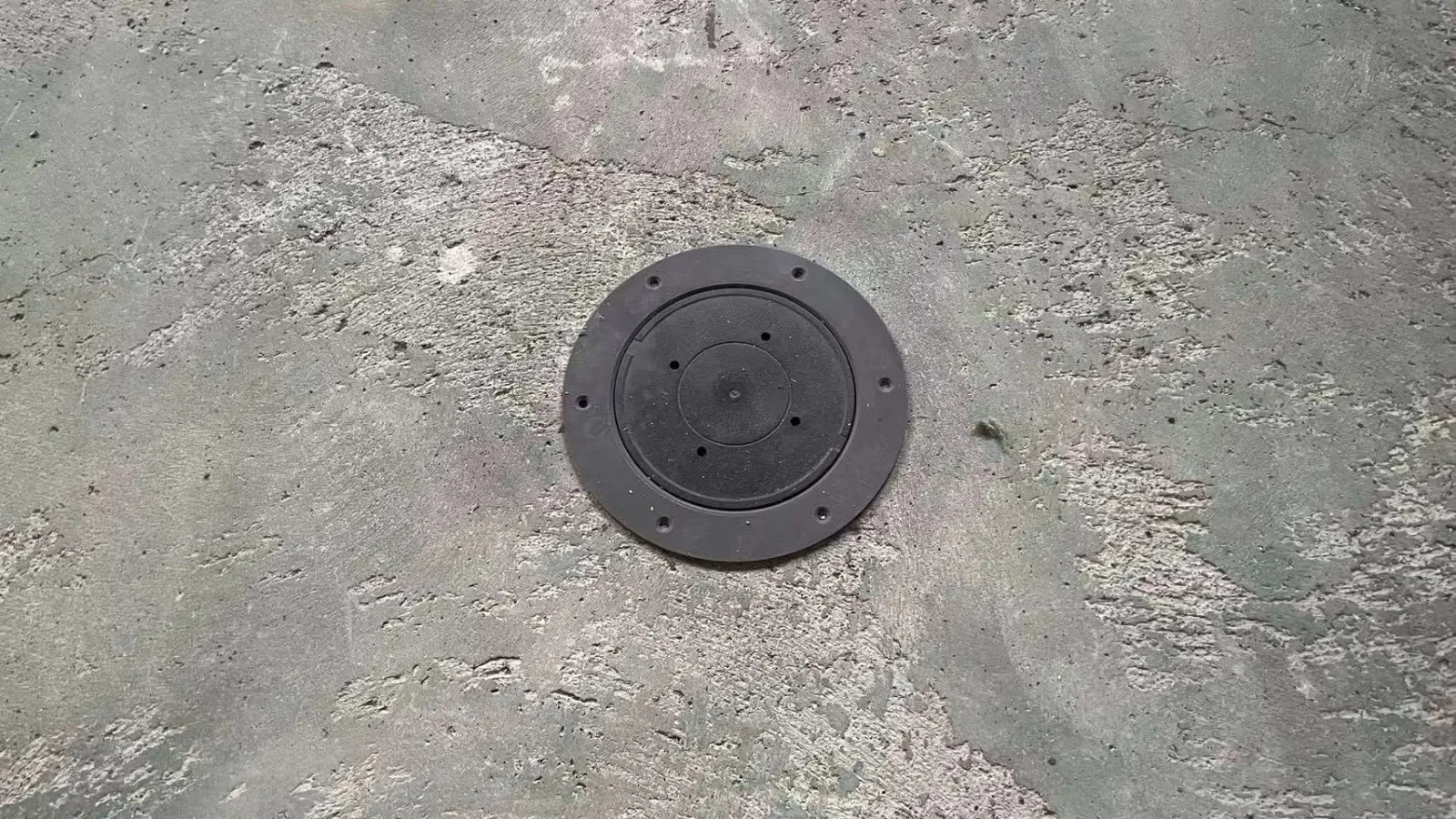
Surface-mounted versions also exist and are quicker to install: they protrude a few centimeters from the road surface, however, and remain exposed to impacts and mechanical sweeping. For spaces on public roads, flush mounting is the more durable choice.
The LoRaWAN network: gateways, range, and battery life
The sensors transmit on the license-free 868 MHz band using the LoRaWAN protocol, the reference standard for long-range sensor networks: a single gateway receives data from hundreds of devices within a radius that exceeds 2 kilometers in urban areas. A change in parking occupancy typically reaches the platform within 30 seconds.
Power consumption is minimal: the sensor runs for years on its internal lithium batteries, from 5 to over 10 years depending on how busy the space is and the distance from the gateway. The batteries come in a standard industrial format and can be replaced without special tools: at end of life you refurbish the sensor rather than buying a new one. Each device also sends a periodic diagnostic signal with its battery level and operating status, and operating parameters can be changed remotely over the radio, with no field visits.
Many cities and regions already operate a public LoRaWAN network, built for local government projects: where one exists, the sensors join the existing gateways and the project starts without building new radio infrastructure. It is the same architecture we describe for monitoring ski resorts: the sensors change, the network does not.
From the sensor to the platform and the app
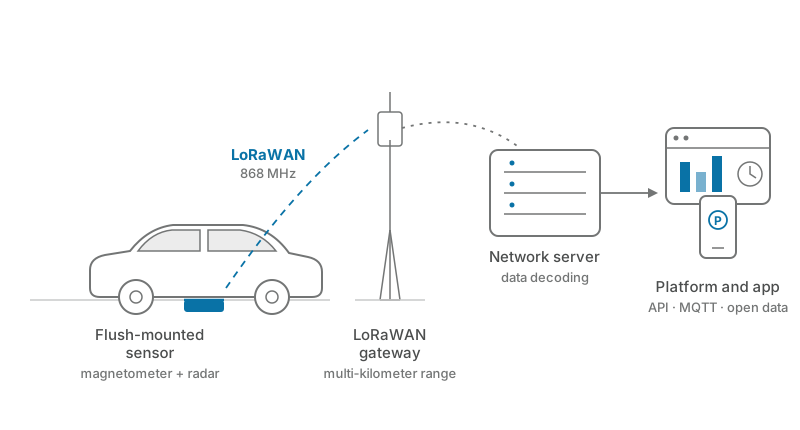
The gateway forwards the radio packets to a network server, the software that manages the devices and decodes the data: the most common choice in the public sector is ChirpStack, open source and license-free. From there, the readings reach applications through open protocols such as MQTT and REST APIs.
On the platform, each space becomes a dot on a map, green or red, with its occupancy history. You can publish the same data in an app for residents, which shows free spaces and guides the driver to the parking area, or expose it as open data and integrate it into the authority's geographic information systems. With our monitoring platform Track-TP, parking data lives alongside network equipment and other IoT sensors, on a single dashboard with alarms and notifications.
Monitoring accessible parking spaces
Many municipalities start exactly here: spaces reserved for people with disabilities are few in number, spread across the whole territory, and the benefit for residents is immediate. Permit holders see free spaces in the app and drive to the nearest one without circling.
The sensor detects occupancy, not authorization: checking the permit remains the job of enforcement officers. Real-time data makes those checks targeted, though: the local police control room sees which spaces are occupied and concentrates checks where they are needed, instead of patrolling at random. Occupancy history also helps the authority decide where to add or relocate spaces.
The same approach applies to other categories of regulated parking: loading and unloading areas, electric vehicle charging spaces, paid parking, and resident-only areas.
What a smart parking project requires
A complete project develops in four steps:
- Inventory and coverage check. The spaces to monitor are geolocated and the radio coverage of the existing gateways is verified, with new receiving points added where needed.
- Installation. Core drilling, fixing, and commissioning of each sensor, with full management of the roadworks site: temporary signage, no-parking orders, and restoration of the area.
- Platform configuration. Device registration on the network server, data decoding, and publication to dashboards, apps, and open data.
- Maintenance. Remote diagnostics flags depleting batteries and faults; a small stock of spare devices allows immediate replacement in the field.
Teleproject designs and builds complete LoRaWAN networks for municipalities, concession holders, and parking operators: from radio coverage checks to the supply and installation of IoT parking sensors, through platform configuration and ongoing technical support. Explore our IoT and LoRaWAN solution.
Frequently asked questions
How long does the battery of a LoRaWAN parking sensor last?
From 5 to over 10 years, depending on the number of daily parking events in the space and the distance from the gateway. The sensor periodically reports its battery level to the platform, so replacement can be planned well in advance. The batteries come in a standard industrial format and can be changed without replacing the device.
Does installation damage the pavement?
No. A single hole per space is enough, core-drilled with equipment that avoids cracking and delamination. The sensor is fixed with resins rated for road use and the finished surface stays level with the roadway. No trenching, no cables, no electrical connections.
Do you need to build a dedicated radio network?
Not always. Many cities and regions have a public LoRaWAN network available to local authorities: where coverage exists, the sensors register on the existing gateways. Where it is missing, a few gateways are enough to cover a town center: each one receives data from hundreds of sensors within a radius of kilometers.
Does detection work with rain, snow, and heavy vehicles?
Yes. Dual-technology sensors cross-check magnetometer and radar: when the radar is disturbed by a film of water the device switches to the magnetic channel, and heavy vehicles passing in the adjacent lane do not trigger false detections. The IP68 protection rating and resistance to over 10 tonnes of compression cover road service in every season.
Can the sensor tell who is not entitled to park in the space?
No: the sensor detects the presence of a vehicle, not the permit. Enforcement remains with the officers, but it becomes targeted: the control room sees occupied spaces in real time and sends patrols where they are needed. It is this pairing of data and on-site checks that reduces illegal parking.