Introduction
DMR (Digital Mobile Radio) underpins many professional communication systems. The more complex and critical the network, the more rigorous the monitoring needs to be. This article covers how to monitor a DMR network, which parameters to track, and which tool to use for network maintenance and optimization.
DMR networks in brief
DMR is a digital radio standard developed by ETSI (European Telecommunications Standards Institute) to address the limitations of analog radio systems. It offers several advantages:
- more efficient use of the radio spectrum
- higher audio quality
- longer battery life for portable radios
- advanced features such as messaging and GPS location
These advantages, however, make network maintenance and optimization more demanding.
Why monitor a DMR network
Continuous monitoring of a DMR network allows you to:
- Detect interference: DMR networks can experience interference from other radio systems or environmental factors. Continuous monitoring identifies interference and resolves it quickly.
- Improve performance: analyzing network data over time lets network managers tune the system and improve its operation.
- Plan capacity: knowing actual network usage helps dimension resources and plan expansions.
- Resolve faults: when a failure occurs, having detailed data reduces downtime.
- Meet regulatory requirements: radio operators must meet defined service standards; documented monitoring helps demonstrate compliance.
Parameters to monitor
Effective DMR network monitoring requires tracking several parameters:
| Parameter | What it indicates |
|---|---|
| Signal level | Received signal power, measured in dBm |
| Channel occupancy | Frequency and duration of channel use — useful for capacity and resource allocation |
| RF spectrum quality | Interference and noise that degrade network performance |
| Coverage | Signal distribution across the service area |
| Interference | Unwanted in-band and out-of-band signals |
Monitoring techniques
Several techniques make monitoring significantly more effective:
- RF spectrum analysis: frequency scans reveal interference sources and support frequency planning.
- Historical analysis: data collected over extended periods shows trends and surfaces problems before they become critical.
- Geographic mapping: correlating signal levels with location helps optimize antenna placement and identify coverage gaps.
- Automatic alerts: automated notifications to technicians reduce response times for critical issues.
- Integration with network management systems: combining DMR monitoring data with that from other systems gives a complete view of the communications infrastructure.
TP-RFX: the spectrum analyzer for DMR networks
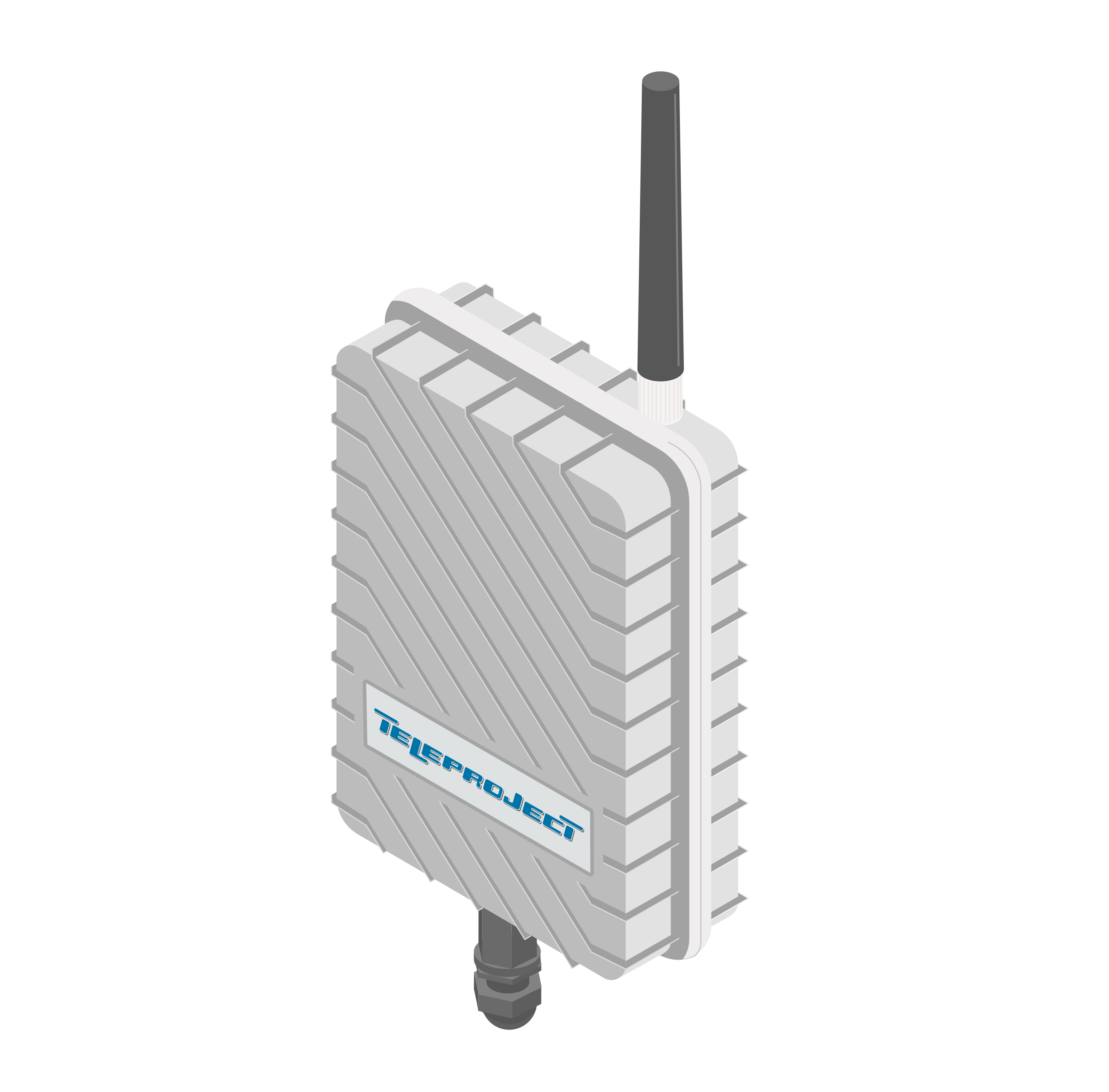
Applying these techniques requires a reliable tool built for field deployment: TP-RFX, the professional outdoor RF spectrum analyzer developed by Teleproject for radio network monitoring and analysis.
- Wide frequency range: 15 MHz to 2700 MHz, covering DMR frequencies and potential interference sources across the full spectrum.
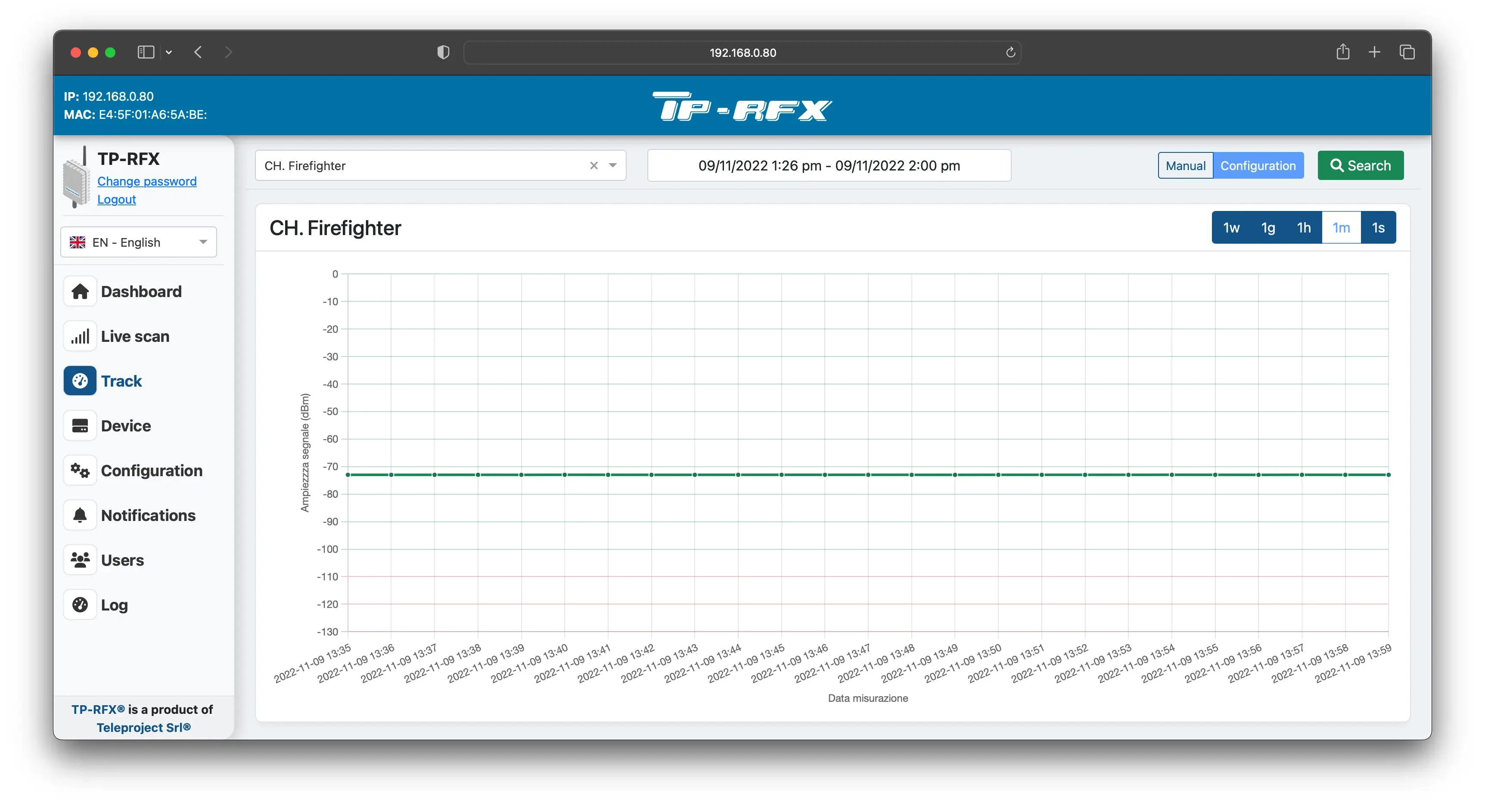
- Real-time monitoring: the Live Scan function detects signal anomalies and interference immediately.
- Historical data analysis: with a measurement history of up to two years, it enables trend analysis and long-term performance optimization.
- Web interface: from the dashboard you configure monitoring parameters, view real-time data, and review historical records.
- Notifications: email alerts, SNMP traps, and relay contacts.
- Operation in any condition: IP67-rated, designed for continuous, uninterrupted outdoor deployment in demanding environments.
- User management: role-based accounts to match your organization's structure and security requirements.
Key specifications
| Specification | TP-RFX |
|---|---|
| Frequency range | 15 MHz–2700 MHz |
| Dynamic range | −130 / +10 dBm |
| Frequency resolution | 1 kHz |
| Power | PoE |
| Protection rating | IP67 |
| Notifications | Email, SNMP, relay |
Frequently asked questions
What makes TP-RFX different from other monitoring solutions?
TP-RFX combines radio spectrum analysis with an IP67 enclosure for outdoor use and a web interface designed for continuous DMR network monitoring.
Can TP-RFX integrate with existing network management systems?
Yes: TP-RFX supports SNMP integration and provides APIs for connecting with existing systems.
Can a DMR network be monitored remotely?
Yes: the TP-RFX web interface is accessible remotely, with role-based user accounts, and alerts are delivered by email, SNMP trap, or relay contact even when no operator is on site.
How long does TP-RFX installation take?
With professional installation, most systems are operational within one working day.
What support is included?
Every TP-RFX includes technical support, software updates, and access to technical documentation.
Conclusion
Effective monitoring is essential for keeping a DMR network performing at its best. By tracking the right parameters with the right techniques, network managers can ensure reliable communications, make full use of available resources, and resolve issues quickly.
TP-RFX provides a complete solution for DMR network monitoring, combining analytical capability, ease of use, and operational reliability. From a small local network to a regional system, it delivers the information needed to keep the network at peak performance.