

Introduction
Uninterrupted communication is essential wherever wireless coverage struggles to reach: large airports, long road tunnels, stadiums, high-rise buildings. DAS — Distributed Antenna Systems — address exactly that challenge. This article explains what a DAS is, how it works, and where it makes a difference.
What is a distributed antenna system (DAS)?
A Distributed Antenna System (DAS) is a network of antennas that distributes wireless service across an area or building. Its purpose is to improve cellular coverage where the signal is blocked or weakened by concrete walls, steel structures, or the sheer size of the facility. Rather than relying on cell towers alone, a DAS spreads the signal evenly throughout the coverage area — including the hardest-to-reach points.
There are three main DAS types:
| Type | Transmission medium | Amplification | Typical application |
|---|---|---|---|
| Active DAS | Fiber optic | Active, with remote units | Airports, stadiums, long tunnels |
| Passive DAS | Coaxial cable and splitters | None | Small to mid-size buildings |
| Hybrid DAS | Fiber optic and coaxial | Mixed | Complex structures |
How does DAS work?
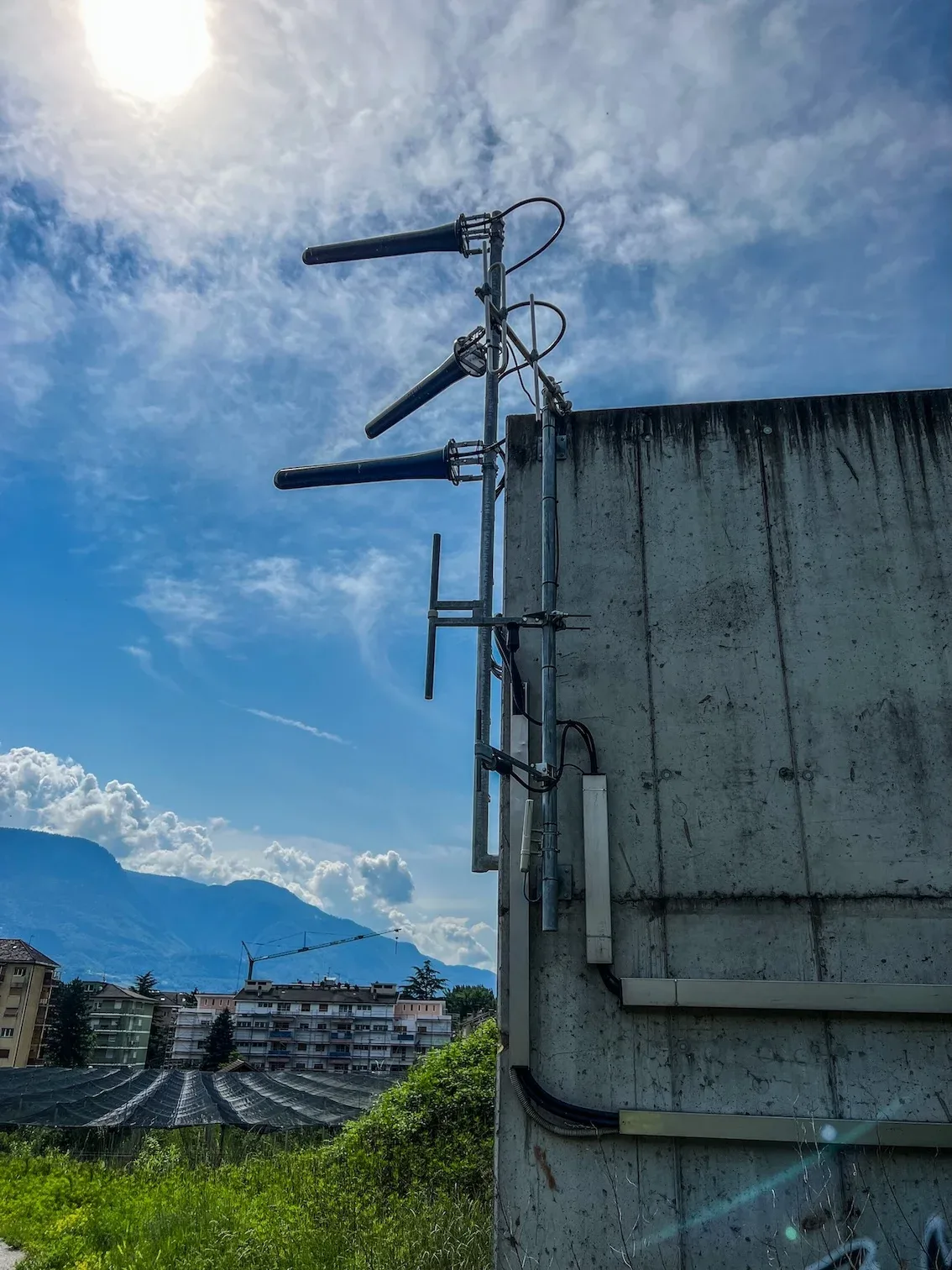
A DAS redistributes the signal from a central source — a cellular base station or a repeater — across the coverage area via multiple antennas. The signal path:
- Signal source: typically a cellular operator's network or an existing base station; it can be an external macro tower or a base transceiver station (BTS).
- Distribution: a central unit processes the signal and carries it to remote units over fiber optic cable or coaxial cable.
- Transmission: antennas placed at the right points throughout the building or tunnel re-radiate the signal to users. By covering the entire space with multiple antennas, the DAS overcomes thick walls and metal structures and maintains uniform coverage.
- Amplification: in active DAS, remote units amplify the signal so that coverage remains consistent at every point in the facility, regardless of distance or obstructions.
Where DAS is used
Airports
Large terminals, multi-level structures, and high equipment density make wireless coverage difficult in airports. DAS ensures coverage from the check-in area to the most remote gates: passengers stay connected, staff communicate without interruption, and critical services — emergencies, baggage handling, flight information — work everywhere.
Road and railway tunnels
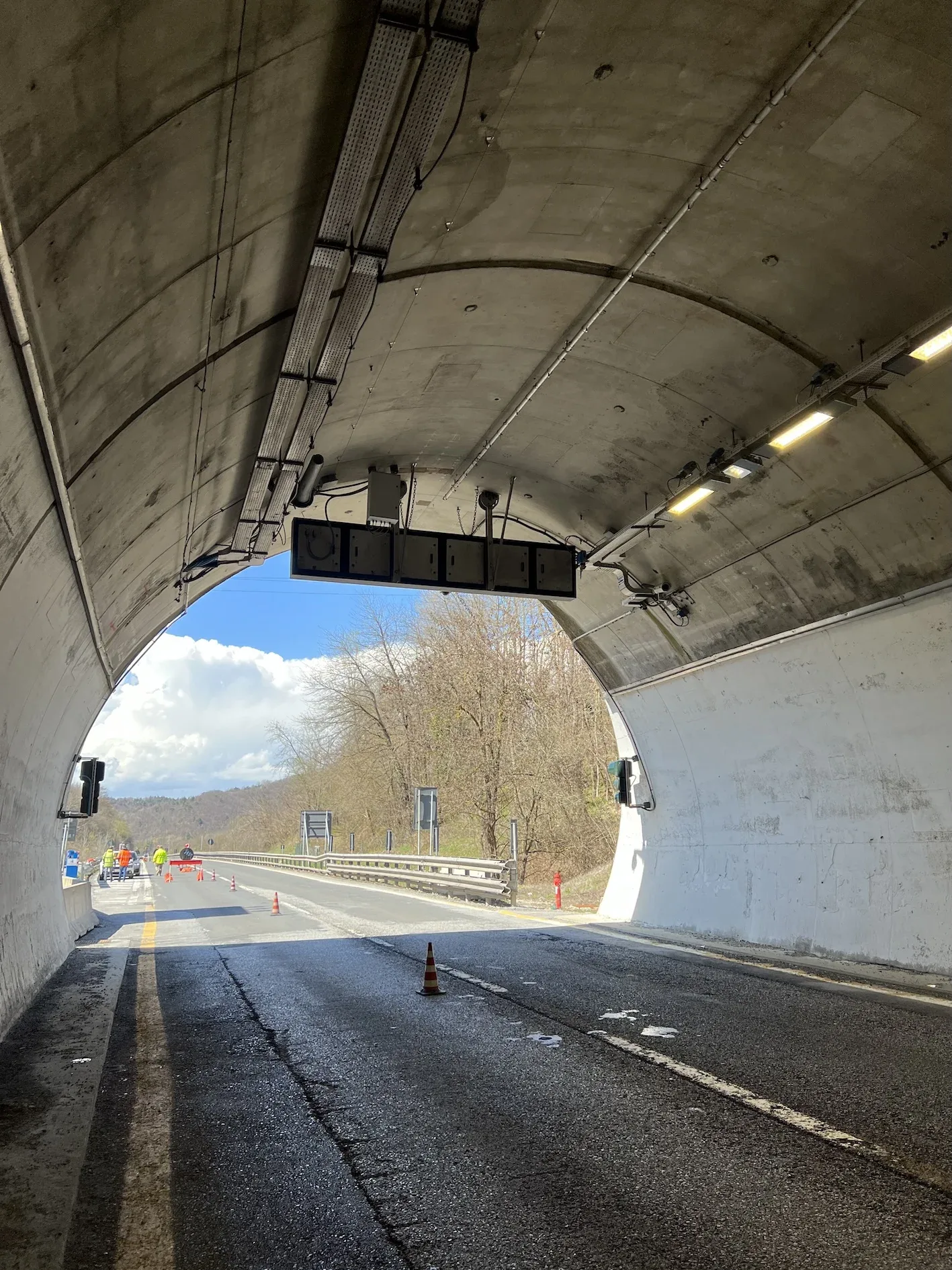
Tunnels are among the most hostile environments for cellular signals: soil and reinforced concrete block radio waves. Modern tunnels use DAS networks to provide cellular service and emergency communications along their entire length, for both travelers and safety personnel.
Stadiums
With tens of thousands of people at an event, cell towers alone cannot handle the load. DAS distributes the signal efficiently and gives every spectator access to mobile data — for sharing videos or checking event information.
Large buildings
In high-rise buildings, conventional cell towers often cover only the lower floors due to the building's height and construction materials. A DAS distributes the signal uniformly across every floor.
Technical details: frequencies and components
Frequency bands
DAS supports multiple frequency bands, including 4G LTE, 5G, and public safety communications. This flexibility makes it suitable for improving public coverage and for ensuring that first responders can communicate in emergency situations.
Components
- Antennas: a network of antennas at key locations maximizes signal coverage.
- Cabling: fiber optic for long runs, coaxial cable for short segments.
- Amplifiers: in active DAS, remote units amplify the signal and maintain coverage even far from the source.
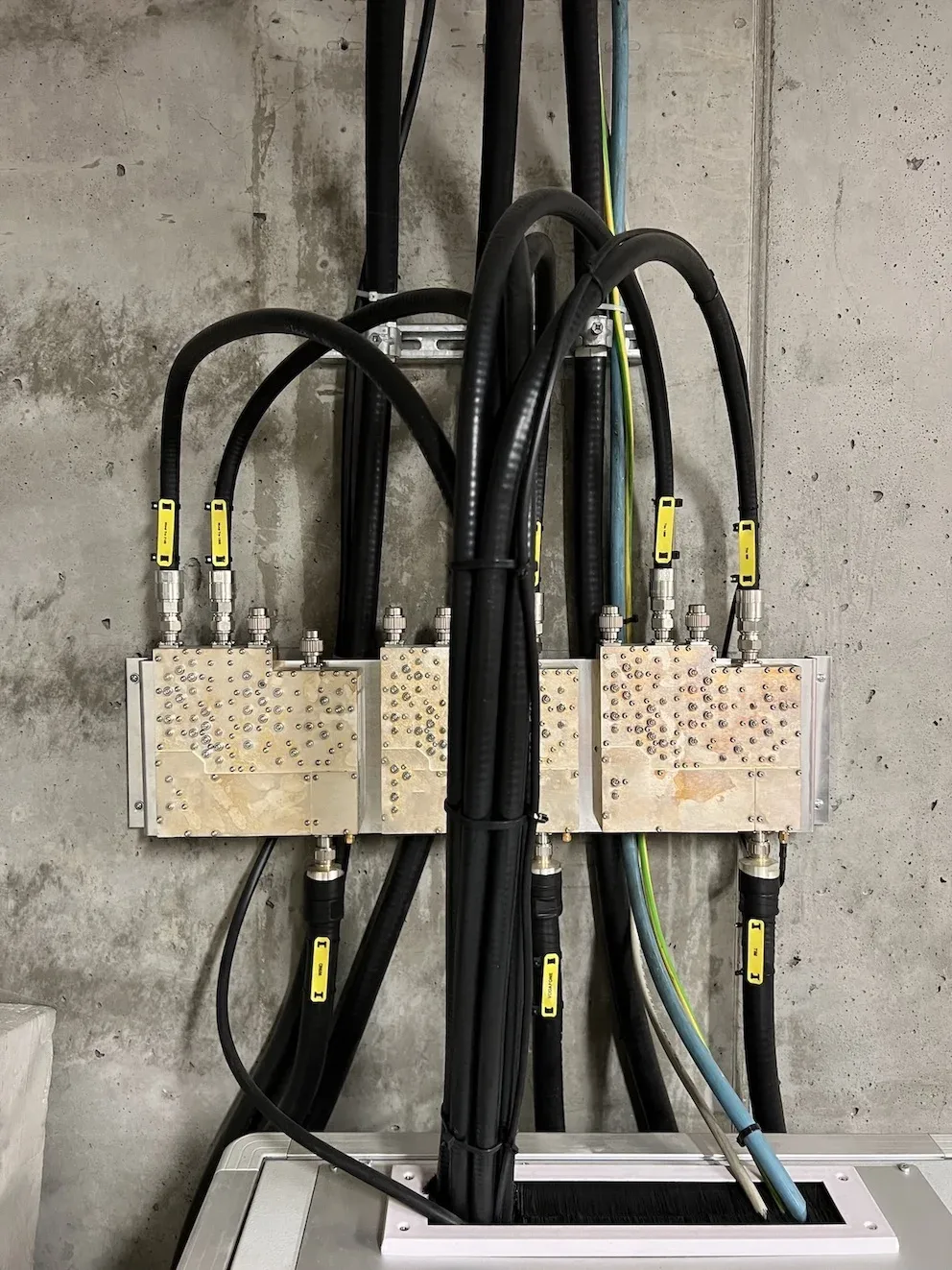
- Splitters and combiners: split the signal among multiple antennas or combine signals from different sources.
Installation and management
Deploying a DAS requires careful planning of antenna placement, accounting for the building's structure, materials, and user density. A monitoring tool typically deployed alongside the system is TP-CELLX — Teleproject's cellular network analyzer — which tracks performance and detects interference in real time. TP-CELLX monitors cellular bands for any operator across 2G, 3G, 4G, and 5G technologies.
Conclusion
Demand for connectivity in large, complex environments continues to grow. DAS addresses many of the limitations of conventional cellular networks precisely where those limitations matter most. It improves reliability, signal strength, and network capacity — for travelers in airports, for coverage in tunnels, for fans in stadiums, and for first responders in high-rise buildings. DAS is now an essential component of modern telecommunications infrastructure.
Frequently asked questions
What is the difference between active and passive DAS?
Active DAS carries the signal over fiber optic cable and amplifies it with remote units — the right choice for large facilities. Passive DAS distributes the signal using only coaxial cable and splitters, with no amplification: simpler and less expensive, suitable for smaller spaces.
Does DAS support 5G?
Yes. Modern DAS systems support multiple bands simultaneously, including 5G bands. In tunnels and large buildings they are often the most practical way to bring 5G coverage where external towers cannot reach.
Does DAS cover emergency communications?
Yes. In addition to commercial cellular bands, a DAS can distribute emergency service frequencies — for example TETRA or DMR. This is an increasingly common requirement in tunnels and large infrastructure facilities.
How do you monitor a DAS?
By deploying tools such as TP-CELLX at critical points: they continuously measure signal level and quality on every band and immediately alert operators when coverage degrades.