
Radio technologies
TETRA technology: the digital radio standard for mission-critical communications.
TETRA, short for TErrestrial Trunked RAdio, is the European standard for professional digital radio communications: instant group calls, emergency priority, and encrypted communications over a private network. This guide explains how a TETRA network works, when to choose TETRA over DMR, and what Teleproject builds: from network design to in-tunnel coverage.

What is TETRA
TETRA, short for TErrestrial Trunked RAdio, is the ETSI standard (ETSI is the European telecommunications standards body) for professional digital radio communications. It emerged in the 1990s to give police forces, emergency services, and critical-infrastructure operators a dedicated radio network: instant group calls, emergency priority, and encrypted communications.
Unlike a cellular network, a TETRA network is private: the channels are guaranteed and do not depend on other users’ traffic. Communication is group-based, and a call sets up in under a second: the operator presses the PTT key and talks to the whole team, with no dialing and no waiting.
In Italy, TETRA is the radio-network technology used by public safety and large infrastructure operators: regional networks, highways, tunnels, and airports. Teleproject designs and builds complete mission-critical radio networks in TETRA technology, from licensing to commissioning.

How a TETRA network works
Five concepts are enough to understand any TETRA project: trunking, call groups, the TMO and DMO modes, the band, and multi-site coverage.
Trunking: shared channels, not fixed channels
In a conventional radio network, each group has its own fixed channel: if no one is talking, the channel stays reserved anyway; if two teams need it at once, one of them waits. With trunking, the channels become a shared pool: the network assigns a free channel to whoever presses the PTT and releases it when the conversation ends. This way, more users communicate over fewer frequencies.
Call groups and priority
The operating unit of a TETRA network is the group, not the individual user: a maintenance crew, a patrol, a control room. The call reaches the entire group in under a second. Every communication has a priority level, and an emergency call overrides ordinary traffic: if all channels are busy, the network frees one up.
TMO and DMO: through the network or radio to radio
TETRA radios work in two modes. In TMO (Trunked Mode Operation) they communicate through the network infrastructure; in DMO (Direct Mode Operation) they communicate directly with each other, where the network does not reach.
- TMO, Trunked Mode Operation
- The ordinary mode: the radios communicate through the network infrastructure, with extended coverage and all the group, priority, and data functions.
- DMO, Direct Mode Operation
- Radio to radio, without a network: used where coverage does not reach, for example in a basement or a remote area, with limited range.
Band and channels: a 25 kHz carrier, 4 slots
For emergency services the band is harmonized across Europe between 380 and 400 MHz; civil and business networks use the 410–430 MHz and 450–470 MHz bands. Each TETRA carrier occupies 25 kHz and is divided in time into 4 slots (TDMA): a single carrier carries up to four communications, voice and data together.
Multi-site coverage
A large area is covered by multiple base stations coordinated by the network core: the radio locks onto the best site and moves from one site to another without interruption. Coverage is not improvised: it is designed with a radio coverage study and verified in the field with RF measurements and drive tests.
- Distinct cells
- Each site is a cell with its own frequencies; the area is covered by multiple adjacent cells.
- Locking onto the best site
- The terminal automatically selects the site with the best signal and registers on it.
- Seamless handover
- As it moves, the terminal passes from one site to the next in the overlap zones, without dropping the communication.
The complete architecture
These elements make up the network: the terminals communicate with the base stations, the sites connect to the network core over microwave radio links or optical fiber, and operators in the control room manage communications from the dispatch consoles.
- Terminals
- Portable radios, vehicle radios, and fixed stations: they are the users’ access points to the network.
- Base stations
- Multiple coordinated sites cover the area; in tunnels the signal travels over DAS and radiating cable.
- Network core
- Switches the calls, assigns the channels (trunking), and manages groups, priority, and encryption.
- Links between sites
- The sites connect to the core over microwave radio links or optical fiber.
Want to dig deeper into encryption, OTAR, and the design criteria of a TETRA network? Read the dedicated article: TETRA radios: professional digital radio communication systems.
TETRA or DMR: which to choose
TETRA and DMR are both ETSI standards, with different network profiles. The table summarizes the essential differences; the full comparison is in the dedicated article.
| TETRA | DMR | |
|---|---|---|
| Architecture | Native trunking, multi-site | Tier II conventional or Tier III trunked |
| Typical fleets | Large fleets, hundreds or thousands of terminals | Small and medium fleets |
| Priority and emergency | Native priority levels and emergency calling | Basic functions, depending on the Tier |
| Redundancy | Native in multi-site networks | Possible in Tier III networks |
| Infrastructure costs | Higher | Lower |
| Typical settings | Public safety, large infrastructure | Business networks, industry, medium-sized infrastructure |
Choose TETRA when the fleet is large, the priority and encryption requirements are high, and the network must serve multiple sites with redundancy: this is the typical case for public safety and large infrastructure. Choose DMR when the fleet is small or medium and the budget is limited: a conventional Tier II or trunked Tier III network covers most business and infrastructure needs.
This is not a matter of principle: Teleproject designs both technologies, including mixed networks where the two coexist. The right choice comes from operational needs, not from a catalog. If you are interested in the other standard, read the guide to DMR technology.

Where TETRA is used
TETRA was created for settings where communication cannot fail. Each sector has its own dedicated page.
Public safety
Radio networks for law enforcement, civil protection, and emergency services, with priority and encryption.
Highways and tunnels
Radio coverage in the tunnel bores with DAS and radiating cable, with continuous carrier monitoring.
Railways and metros
Operational and emergency communications along the line and in railway tunnels.
Defense and military
Secure, encrypted communications for military installations and operations.
Utilities and industry
Radio networks for energy and water utilities and for industrial sites, with lone-worker safety functions.
Aviation and airports
Coordination of vehicles and ground crews in the operational areas of the airport.


For the industrial sector, you can explore two use cases: protecting lone workers with radio systems and DMR and TETRA radios in ATEX environments.
What Teleproject offers for TETRA
A TETRA network is not an off-the-shelf product: it is a project. We handle the entire cycle, from licensing to maintenance, with products developed in-house for coverage and monitoring.
Complete, turnkey TETRA networks
We handle the project with a single point of contact: coverage study, licensing, equipment supply, installation, commissioning, and maintenance under SLA contracts.
Terminals and base stations
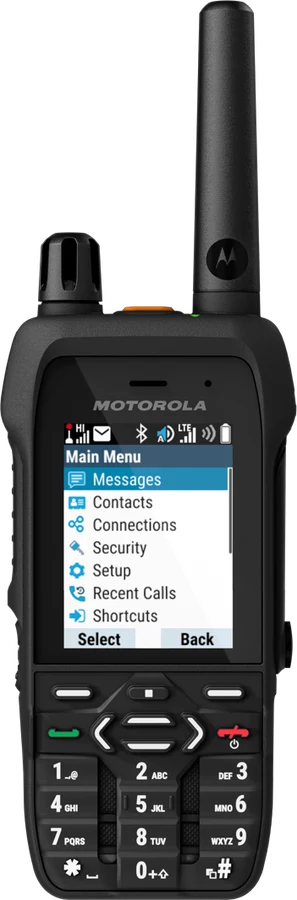
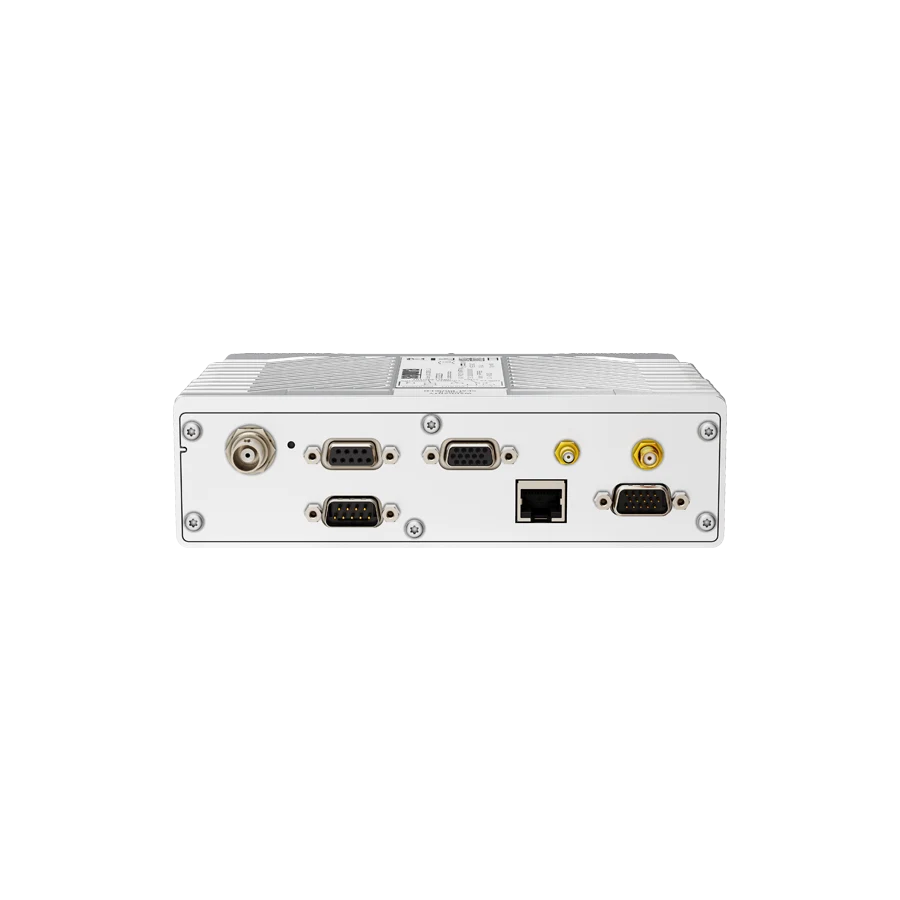
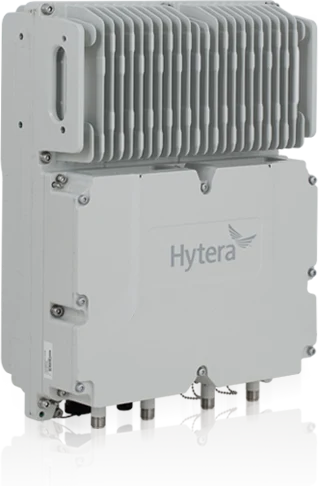
We supply, program, and integrate portable, vehicle, and fixed terminals from Motorola Solutions, Sepura, and Hytera, together with the base stations and repeaters to extend coverage.
TETRA coverage in tunnels
DAS and radiating cable carry the TETRA signal in the 380–400 MHz band inside the tunnel bores. We have installed these systems in over 100 tunnels, across more than 500 km of highway routes.
Monitoring TETRA carriers
TP-RFX monitors the presence of TETRA carriers in the tunnel 24 hours a day and alerts technicians at the first missing signal. TP-CCV2, patented, checks the continuity of the radiating cable in real time.
Radio rebroadcasting in tunnels
TP-DAB distributes the TETRA signal (380–420 MHz) over optical fiber together with the FM and DAB+ signals, with independent emergency messages per tunnel bore.
Dispatching and control rooms
Respondr unifies TETRA, DMR, and analog networks and cellular PTT in a single operator console, in the cloud or in your control room.
Browse the TETRA catalog
The current models from the manufacturers we work with, with specifications and official datasheets: choose a category.
- Base station
- Installed in the equipment room at the portal, it feeds the radiating cable with the TETRA signal.
- Radiating cable
- It runs along the tunnel bore and radiates the signal evenly toward the vehicles and crews in the tunnel.
- TP-CCV2
- Checks the electrical continuity of the radiating cable in real time: it detects short circuits and breaks.
- TP-RFX
- Monitors the presence of TETRA carriers 24 hours a day and alerts technicians at the first missing signal.
To learn more, read how to monitor radiating cables in critical infrastructure.
Frequently asked questions about TETRA
Frequencies, licensing, differences from DMR, and in-tunnel coverage: the essential answers to the questions we hear most often.
What frequencies does TETRA use?
In Europe, TETRA networks for emergency services use the 380–400 MHz band, harmonized by CEPT/ECC decisions; civil and business networks use the 410–430 MHz and 450–470 MHz bands. Each carrier occupies 25 kHz and carries up to four communications.
In Italy. The interagency TETRA network is operated by the Ministry of the Interior in the 380–400 MHz band. Self-managed networks, for example in the 450–460 MHz band, use the frequencies that the national frequency allocation plan (D.M. 31 agosto 2022) reserves for the professional mobile radio service.
What is the difference between TETRA and DMR?
Both are ETSI standards for professional digital radio. TETRA was created for multi-site trunking, with native priority, encryption, and emergency calling: it is the typical choice for large fleets and public safety. DMR covers small and medium fleets at lower cost, in a conventional (Tier II) or trunked (Tier III) configuration.
What do TMO and DMO mean?
TMO (Trunked Mode Operation) is the ordinary mode: radios communicate through the network infrastructure, with extended coverage and all the group functions. DMO (Direct Mode Operation) connects two radios directly, without a network: it is used where coverage does not reach, with limited range.
Do TETRA radios work in tunnels?
Yes, if the tunnel is covered: the signal does not reach the bores on its own. Coverage is provided with DAS and radiating cable fed by a base station at the portal. Teleproject has installed these systems in over 100 tunnels and keeps them under control with TP-RFX and TP-CCV2.
Is TETRA made obsolete by cellular networks?
No. For mission-critical voice, TETRA remains the reference standard: a private network, a guaranteed channel, an instant group call. Cellular PTT over LTE and 5G complements it where data and extended coverage are needed, and platforms like Respondr let the two technologies coexist in the same console.
Do you need a license to operate a TETRA network?
Yes. In every European country, the use of frequencies is subject to authorization from the national regulator.
In Italy. A general authorization with frequency usage rights is required under D.Lgs. 259/2003; the application is submitted through the MIMIT portal and involves administrative fees and annual contributions. Teleproject handles the paperwork on the client’s behalf.
Let’s talk about your TETRA project.
A new network, extending in-tunnel coverage, or monitoring the carriers: we take care of design, build, and technical support, with a single point of contact.